

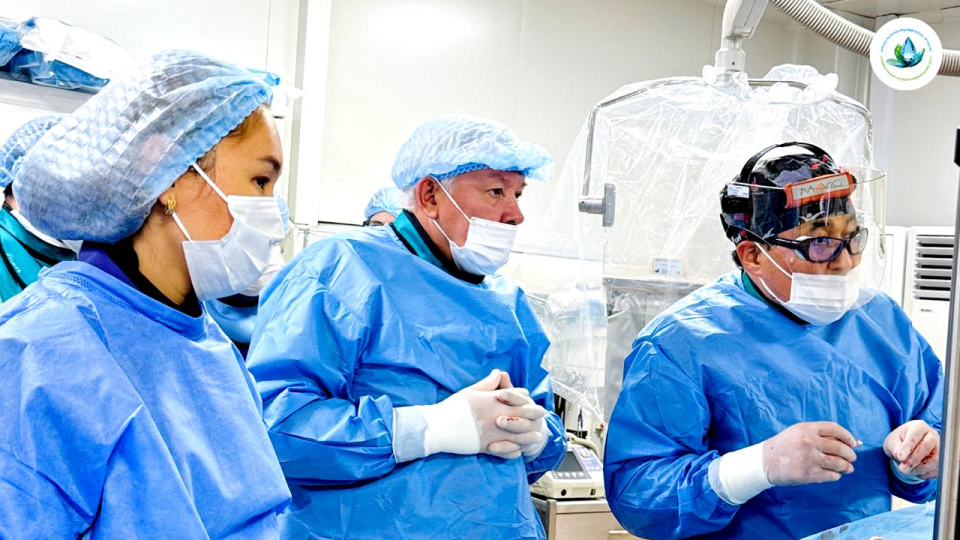
The National Research Medical Center (NRMC) hosted a two-day master class dedicated to the application of modern knee artery embolization (KAE) techniques in the treatment of gonarthrosis.
Gonarthrosis (osteoarthritis or deforming osteoarthritis of the knee joint) is a degenerative disease in which the cartilage of the joint gradually deteriorates. This leads to pain, stiffness, and limited mobility of the knee, and in advanced cases – to deformity and disability.
KAE technique is a new, minimally invasive procedure that effectively reduces pain and improves joint function. The essence of the method lies in blocking the pathological blood flow that feeds the inflammatory focus associated with osteoarthritis. It is known that chronic synovitis is the main source of pain syndrome and progression of osteoarthritis.
Embolization of the knee arteries is recommended for patients who:
✅ do not respond to conservative treatment,
✅ have contraindications to surgical intervention,
✅ are not yet ready for joint replacement,
✅ or in the postoperative period after knee replacement, if pain and inflammation persist.
During the master class, a total of 7 embolizations were performed:
✅ 4 patients with grade III gonarthrosis,
✅ 3 patients after knee replacement.
It is especially noteworthy that, for the first time in Kazakhstan, embolization of the knee arteries was performed in patients after endoprosthetic replacement. This marked an important step in the development of minimally invasive methods for treating joint pathologies in the country.


